
Think of managed IT services for healthcare as hiring a specialized team to look after your practice's technology. Instead of calling an IT person only when something breaks, you have a dedicated partner proactively managing everything from your network and security to user support. They do all this for a flat monthly fee, making sure your systems are secure, compliant, and always online.
What Are Managed IT Services in Healthcare
Let's use an analogy. You wouldn't wait for a patient to have a heart attack to start thinking about their cardiovascular health. You'd recommend preventative care, regular check-ups, and a healthy lifestyle. Managed IT services apply that same proactive philosophy to your clinic's technology.
It's a complete departure from the old "break-fix" model, where IT was an emergency service you called after a server crashed or a computer got a virus. A Managed Services Provider, or MSP, acts as a full-time guardian for your digital infrastructure. Their entire job is to anticipate and prevent problems, ensuring the tech you rely on for patient care works flawlessly.
In a healthcare environment, this proactive approach isn't just a convenience—it's essential. Downtime isn't just an annoyance; it can mean cancelled appointments, inaccessible patient records, and a frustrated team. An MSP focuses on keeping your systems healthy 24/7, much like a physician works to keep a patient well.
The Three Pillars of Healthcare IT Management
A solid healthcare IT strategy is built on three core pillars: unwavering network management, ironclad data security, and fast, knowledgeable user support. Each one is crucial for the demands of a modern medical practice.
- 24/7 Network Monitoring: Your MSP keeps a constant watch over your servers, computers, and network equipment. They spot and fix potential issues long before they can disrupt your clinic's workflow.
- Robust Data Security: Healthcare organizations are a top target for cybercriminals. A healthcare-focused MSP implements multiple security layers—like firewalls, data encryption, and advanced threat detection—to safeguard protected health information (PHI).
- Specialized Helpdesk Support: When your staff runs into a tech problem, they need help now. A good MSP provides a helpdesk staffed by technicians who understand the specific software, like your EHR system, and the urgency of a clinical setting.
This image really drives home how these elements come together to support your practice.
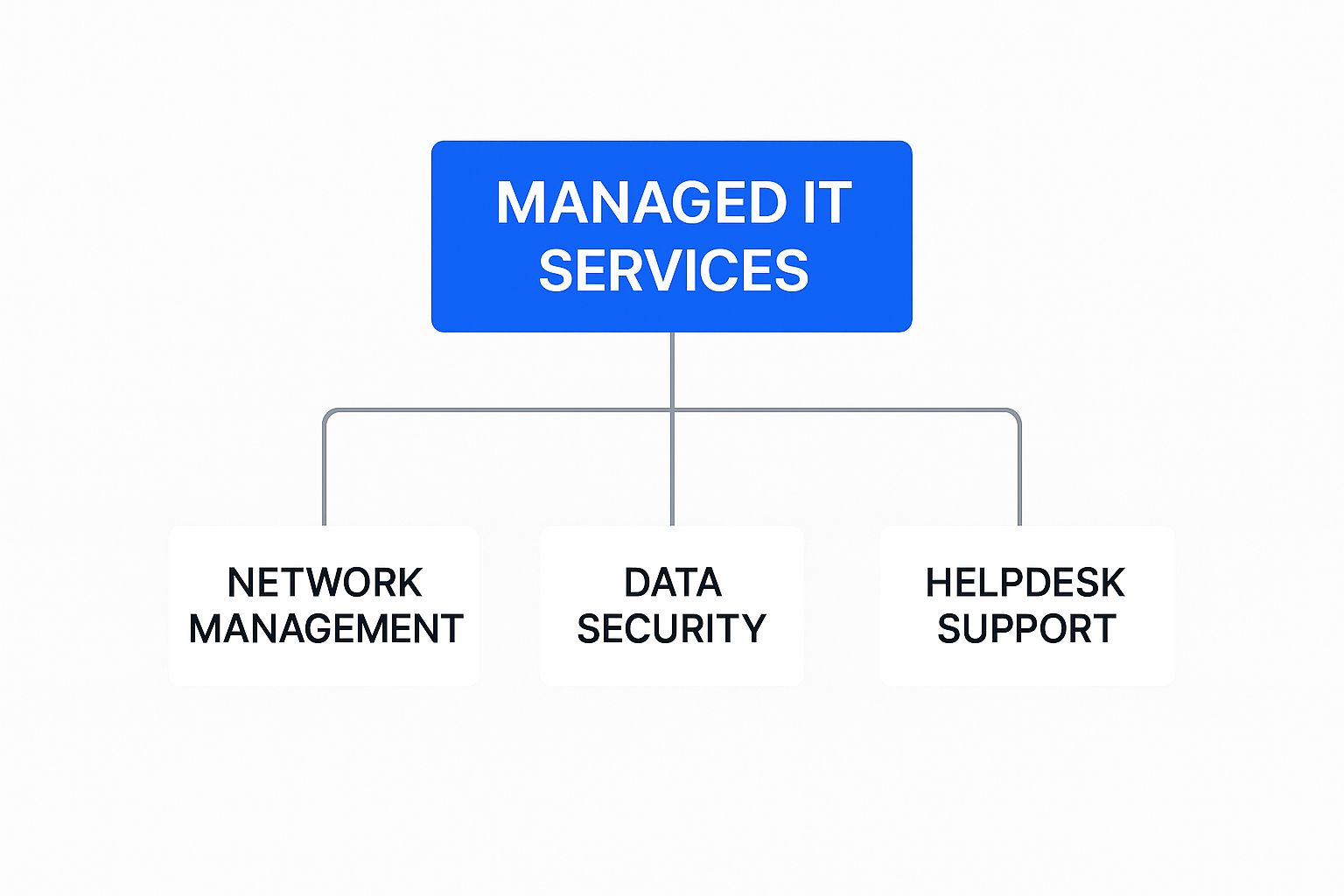
As you can see, it’s not about picking and choosing services. A true managed IT strategy weaves these components into a single, comprehensive solution that covers all your technology needs.
To make this even clearer, let's break down the most common services and how they directly benefit your practice.
Core Healthcare Managed IT Services and Their Impact
This table outlines the essential services a healthcare MSP provides and the direct benefits for your medical facility's daily operations and security.
| Service Component | Description | Impact on Healthcare Operations |
|---|---|---|
| Proactive Network Monitoring | Continuous, 24/7 surveillance of all network devices, servers, and workstations to detect and resolve issues before they cause downtime. | Prevents system crashes during clinic hours, ensuring constant access to patient records and scheduling systems. |
| HIPAA-Compliant Security | Implementation of security measures specifically designed to meet HIPAA requirements, including firewalls, encryption, and access controls. | Protects sensitive Patient Health Information (PHI) from breaches, avoiding hefty fines and reputational damage. |
| Data Backup & Disaster Recovery | Regular, automated backups of all critical data with a clear plan to restore systems quickly in case of a disaster (e.g., cyberattack, hardware failure). | Minimizes data loss and ensures your practice can get back up and running quickly after an unexpected event. |
| Helpdesk & User Support | On-demand technical support for your staff, provided by technicians who understand clinical software and workflows. | Reduces staff frustration and lost productivity by quickly resolving technical issues, from EHR glitches to printer problems. |
| Vendor Management | The MSP acts as the single point of contact for all your technology vendors, such as your internet provider or EHR software company. | Frees up your administrative staff from spending hours on the phone with tech support, letting them focus on practice management. |
These services work in concert to build a resilient and efficient technological foundation for your practice.
Ultimately, this partnership allows your clinical and administrative teams to do what they do best: focus on patient care. They can work with the confidence that the technology supporting them is reliable, secure, and fully compliant with regulations like HIPAA. It's about turning technology from a potential headache into a powerful asset that helps improve patient outcomes.
Navigating HIPAA Compliance with an IT Partner

For any healthcare organization, HIPAA isn't just a box to check—it's the bedrock of patient trust. A single breach of Protected Health Information (PHI) can trigger a cascade of problems, from steep financial penalties to a shattered reputation that’s incredibly difficult to rebuild. This is where a specialized managed IT services for healthcare provider proves its worth.
Think of your IT partner as a translator. They take the dense, technical language of the HIPAA Security Rule and turn it into practical, everyday protections for your practice. They get that compliance isn't a one-and-done project; it's an ongoing commitment to managing risk and adapting to new threats.
This partnership is so critical because the consequences of getting it wrong are severe. The Department of Health and Human Services can impose penalties ranging from $100 to $50,000 per violation, with a potential annual cap of $1.5 million. A good managed services provider (MSP) works tirelessly to make sure your technology is an asset, not a liability.
Translating Technical Safeguards into Practice
The HIPAA Security Rule lays out a map of technical safeguards needed to protect electronic PHI (ePHI). A skilled IT partner doesn't just read the map—they build the roads for you, turning abstract regulations into tangible security measures.
- Access Control: This is all about ensuring only the right people can see ePHI. Your IT partner will set up unique user logins, permissions based on job roles, and automatic logoff features to prevent sensitive data from being left open on an unattended screen.
- Audit Controls: An MSP implements systems that create a digital breadcrumb trail, logging who accessed what information and when. This is absolutely essential for tracing the source of any potential security incident.
- Integrity Controls: This means making sure ePHI isn't accidentally or maliciously changed or deleted. Your IT team uses specific tools and protocols to guard the integrity of the data, so you can always trust that your clinical information is accurate.
- Transmission Security: Any time ePHI is sent electronically—whether to another provider, a lab, or a patient—it must be protected from prying eyes. This is where encryption becomes non-negotiable.
Encryption is more than a buzzword; it's a fundamental shield for patient data. A top-tier MSP ensures all information, whether it's sitting on a server ("at rest") or moving across the internet ("in transit"), is scrambled and unreadable to anyone without authorization.
For instance, when a doctor emails a patient's chart, that email has to be secure from end to end. You can dive deeper into this topic with this essential guide to HIPAA compliant email encryption.
The MSP as Your Compliance Ally
Beyond setting up the technical nuts and bolts, your managed IT provider acts as a long-term strategic partner. They perform regular risk assessments to hunt down new vulnerabilities, which could be anything from a piece of unpatched software to a poorly secured Wi-Fi network.
They also help you create and enforce your internal security policies. A solid IT compliance policy is the playbook for how your entire team handles data safely. If you’re looking to build or improve your own policies, our guide on creating an IT compliance policy walks you through the essential components.
Ultimately, working with an MSP specializing in healthcare IT brings a profound sense of security. It gives you the peace of mind that comes from knowing every part of your tech infrastructure is being actively monitored and managed to meet the industry's toughest standards. This frees you up to put all your energy where it belongs: on providing outstanding patient care.
The Strategic Benefits of Outsourcing Healthcare IT
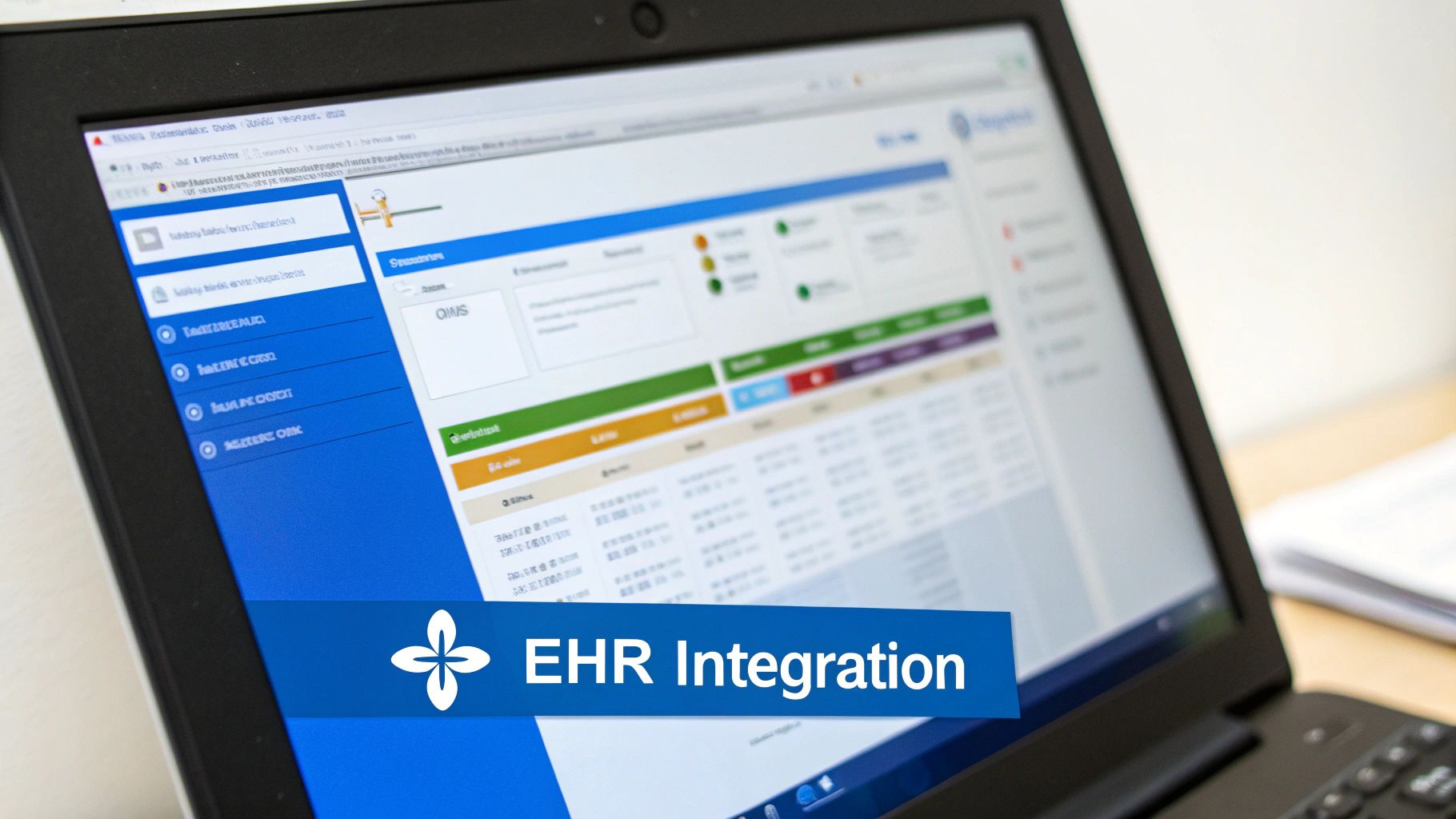
Handing over your IT to a managed services partner is about much more than just fixing broken computers. It's a strategic decision that fundamentally changes how your practice functions, turning technology from a drain on your resources into a powerful asset that supports your mission: patient care.
Think about it this way: instead of getting hit with massive, unexpected bills every time a server crashes, you move to a predictable, fixed monthly fee. This simple shift provides access to an entire team of certified specialists, often for far less than the cost of hiring and training even one full-time IT person. That kind of financial stability makes budgeting and planning so much easier.
But the real wins go far beyond the numbers on a spreadsheet; they touch every part of your daily operations and security.
Unlocking Enterprise-Grade Security
Let's be honest—most private practices simply can't afford the same level of cybersecurity as a major hospital. This is where a specialized managed services provider (MSP) becomes a true game-changer. They give you access to sophisticated security tools and expertise that would otherwise be completely out of reach. In an industry that’s a constant target for cyberattacks, this isn't just a nice-to-have; it's essential.
A good IT partner will build a defense-in-depth strategy, including:
- Advanced Threat Detection: Actively hunting for and stopping threats before they can do any harm.
- Vulnerability Management: Continuously scanning your systems for weak spots and patching them up.
- Security Awareness Training: Turning your staff into a human firewall by teaching them how to recognize and report phishing emails and other scams.
This comprehensive approach is your best defense for protecting sensitive patient information and staying on the right side of HIPAA.
Boosting Uptime and Productivity
Downtime is a practice killer. When your EHR system goes dark or a telehealth connection drops, appointments are canceled, staff can't do their jobs, and patient care suffers. The core job of an MSP is to prevent this from happening through proactive, behind-the-scenes management.
A dedicated IT partner works tirelessly to keep your critical systems running smoothly. By anticipating and fixing problems before they disrupt your day, they ensure your team stays focused on patients, not on fighting with technology. This leads directly to a more efficient clinic and a better experience for everyone.
This proactive mindset is more important than ever. The global healthcare IT market is exploding, projected to grow from USD 413.14 billion in 2025 to over USD 839.67 billion by 2030, all fueled by the adoption of complex tools like telehealth. You can explore more data on these trends to see just how fast things are moving.
Ultimately, the greatest benefit of using managed IT services for healthcare is empowerment. By letting experts handle the technology, you free up your clinical and admin staff to pour all their energy into what truly matters: caring for people. It’s about making sure your technology works for you, not the other way around.
Core Services in a Healthcare IT Support Plan
When you bring a managed services provider (MSP) on board, you're not just getting a simple tech-support hotline. You're really investing in a whole ecosystem of services that work together to keep your practice running securely and efficiently. A solid plan for managed IT services for healthcare is much more than a break-fix service; it’s a digital fortress built around your entire operation.
The absolute cornerstone of any plan is support for your Electronic Health Record (EHR) system. This goes way beyond troubleshooting glitches. It’s about proactively tuning the system so it runs fast, letting your clinicians chart patient visits without frustrating lags. It also means handling software updates and making sure your EHR plays nicely with other essential tools, from billing platforms to patient portals.
Beyond the basics, these core services often extend to specialized clinical software. For instance, a good IT partner can help integrate and maintain medical speech-to-text solutions, which are a huge time-saver for busy doctors trying to keep up with documentation.
Robust Cybersecurity and Proactive Defense
In the world of healthcare, cybersecurity isn't just a nice-to-have—it's a non-negotiable part of the job. A comprehensive IT support plan layers multiple defenses to shield sensitive Protected Health Information (PHI) from an endless stream of digital threats. This is so much more than just installing antivirus software and calling it a day.
A truly proactive strategy involves several key activities:
- Advanced Threat Detection: Using intelligent tools to watch network traffic for any signs of trouble, stopping potential attacks before they can do real harm.
- Regular Vulnerability Scanning: Constantly checking your software, servers, and network gear for security holes and patching them up before they can be exploited.
- Security Awareness Training: This is a big one. It's about teaching your staff how to recognize and report phishing emails and other scams, effectively making them your first line of defense.
This intense focus is critical, especially as technology becomes more embedded in healthcare. The global healthcare IT services market was valued at USD 58.16 billion in 2024 and is expected to climb to nearly USD 198.90 billion by 2034. That explosive growth shows just how crucial strong security has become.
Unshakeable Data Backup and Disaster Recovery
Here's a question that should keep any practice manager up at night: What happens if a cyberattack, a flood, or a simple server crash takes your systems offline? A core part of any healthcare IT plan is having a concrete answer, and that answer is a solid data backup and disaster recovery (BDR) strategy.
Think of a BDR plan as your practice's technological insurance policy. It ensures that even in a worst-case scenario, you can recover your critical patient data and resume operations with minimal disruption to patient care.
This is far more sophisticated than just copying files to an external hard drive. A professional MSP sets up automated, encrypted backups that are tested on a regular basis to make sure they actually work. They’ll map out a clear, step-by-step recovery plan to get your practice back on its feet quickly, protecting both your data and your ability to care for patients.
How to Choose the Right Healthcare IT Provider
Picking a partner for your managed IT services for healthcare is one of the biggest technology decisions your practice will ever face. This isn't just about finding someone to fix computers. You're entrusting a strategic partner with the keys to your kingdom—your patient data, your operational stability, and your compliance.
The right provider can feel like an extension of your own team, boosting efficiency and locking down security. The wrong one? They can become your single biggest liability.
Think of it this way: you wouldn't send a patient with a complex heart condition to a general practitioner. You'd find a cardiologist. The same logic applies here. A general IT provider might know technology, but a healthcare IT specialist understands the unique anatomy of a medical practice, especially the absolute, non-negotiable demands of HIPAA. An IT team that doesn't live and breathe healthcare compliance simply won't grasp the real-world stakes of protecting PHI or the panic of an EHR system going down mid-clinic.
Vetting Your Potential IT Partner
You have to get past the slick sales presentations and uncover what a provider can actually do. This means asking tough, specific questions. Don't be shy about digging into their processes, their experience, and their track record. For a general guide on vetting providers, our article on how to choose the right MSP for your business is a great starting point.
When it comes to healthcare, however, your questions need to be much more pointed. Here are a few must-asks for any IT provider you're considering:
- HIPAA & Compliance: "Walk me through your process for a HIPAA security risk analysis. How do you document everything, and how do you train your own team to maintain compliance?"
- EHR Experience: "Which specific EHR platforms do you have hands-on experience with? Can you connect us with a reference from another practice that uses the same EHR as us?"
- Security Incident Response: "Let's say we get hit with a ransomware attack right now. What's your immediate, step-by-step response plan? What are your guaranteed response times?"
- Client Case Studies: "Can you share any case studies from healthcare clients that are similar to our practice in size, specialty, and challenges?"
A provider's answers tell you everything. If they're vague or dance around the question, that’s a huge red flag. You want to hear confident, detailed responses that show they’ve been in the trenches and know exactly what to do.
At the end of the day, you're searching for a partner who speaks your language—the language of compliance, clinical workflows, and patient care. They need a proven, documented history of helping practices just like yours. This vetting process is your single best defense against making a costly mistake.
The Future of Managed Services in Healthcare
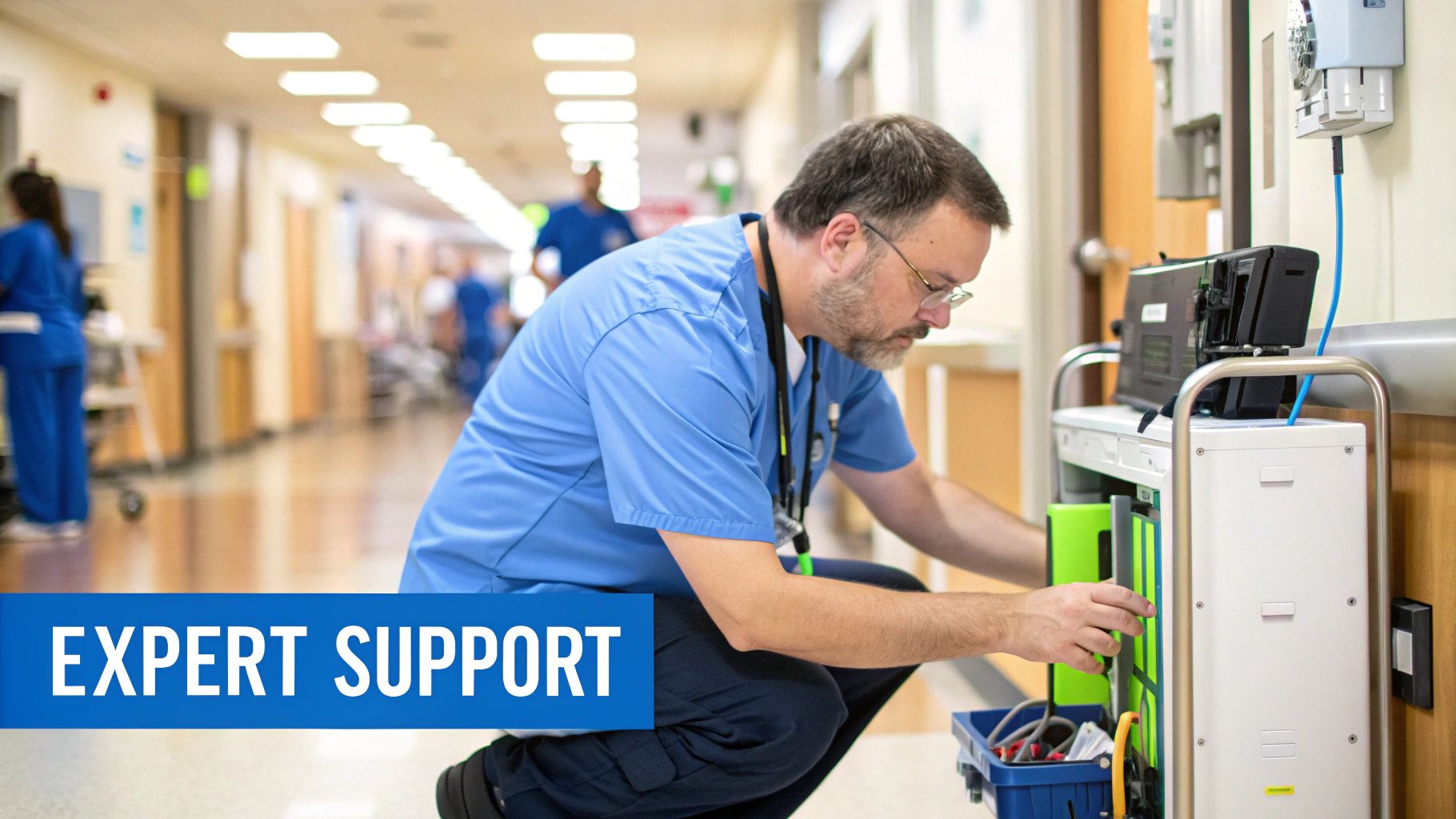
Healthcare is moving forward at an incredible pace, and technology is firmly in the driver's seat. We're on a path toward smarter, more connected patient care, which makes having a forward-thinking IT partner more critical than ever. The future isn't just about keeping the systems running; it’s about building a technological backbone that’s robust enough to support the next generation of medical breakthroughs.
As emerging technologies become the new standard, the role of managed IT services for healthcare will evolve from a simple support function into a core strategic asset. This is especially true as artificial intelligence (AI) finds its way into diagnostics and treatment planning. These sophisticated AI tools are completely dependent on a stable, secure, and high-performance infrastructure—precisely what a specialized MSP is built to deliver.
This shift is part of a much larger trend. The U.S. healthcare IT market alone hit USD 104 billion in 2024 and is on track to reach a staggering USD 325.2 billion by 2033, powered by the widespread adoption of EHRs and telehealth. You can see more analysis on the U.S. healthcare IT market to grasp the sheer scale of this growth.
The Rise of the Connected Patient
The explosion of Telehealth and Remote Patient Monitoring (RPM) has fundamentally changed how healthcare is delivered. These services aren't just a passing trend; they demand an IT infrastructure that is not only dependable but also incredibly scalable and secure to manage the constant stream of sensitive patient information.
Another exciting frontier is the Internet of Medical Things (IoMT). This growing network of connected devices, from smart insulin pumps to wearable ECG monitors, provides amazing opportunities for continuous patient monitoring. But with every new device, a new potential vulnerability is introduced.
A proactive MSP is essential for managing this expanding digital ecosystem. They don't just react to problems; they anticipate the security challenges posed by IoMT and implement robust measures to protect the entire network, ensuring that innovation doesn't come at the expense of patient safety.
Ultimately, future-proofing your practice means finding a tech partner who gets these emerging trends. They are the key to ensuring your clinic can adopt new technologies confidently, securely, and effectively, without missing a beat.
Frequently Asked Questions
It’s completely normal to have questions when you’re looking into something as important as your practice’s IT. Let's walk through some of the most common things we get asked about managed IT services for healthcare.
What Makes Healthcare IT Different from General Business IT?
Think of it this way: standard IT keeps a business running, but healthcare IT directly supports patient care and, ultimately, patient lives. The biggest difference is the huge responsibility that comes with handling Protected Health Information (PHI) and making sure clinical systems are always, always online when needed.
A general IT provider might not grasp the sheer gravity of HIPAA compliance or what it means when an EHR system crashes in the middle of a busy clinic day. Healthcare IT isn't just a different flavor of business IT; it’s a specialized field demanding an intense focus on security, compliance, and reliability that you just don't find elsewhere.
Are Managed IT Services Affordable for a Small Private Practice?
Absolutely. In fact, for many small practices, it ends up being a much more budget-friendly route. Bringing a single, experienced IT professional onto your payroll is a significant expense.
With a managed services plan, you get access to a whole team of specialists for one predictable monthly fee—a fee that's usually much lower than an in-house salary. This approach eliminates those dreaded surprise repair bills and transforms your IT spending into a stable, manageable operating cost.
The real advantage here is getting enterprise-grade tools and expertise without the enterprise-level price. It puts top-tier security within reach for practices of any size.
How Does an MSP Handle an EHR System Migration?
A seasoned healthcare MSP treats this process with the meticulous care it deserves. It all starts with in-depth planning and assessment to understand your practice's unique setup. From there, they perform complete data backups and even a test migration to catch any potential hiccups before they become real problems.
The actual switch-over is almost always scheduled for off-hours, like overnight or on a weekend, to cause as little disruption as possible. Once the new system is live, the MSP provides hands-on support to get your team comfortable and ensure everything is running perfectly.
What Happens During an IT Emergency After Hours?
Any quality managed services provider worth their salt will offer 24/7/365 monitoring and support. If a critical piece of equipment like a server or your network goes down in the middle of the night, their systems will probably spot it before you do.
Their on-call engineers are alerted instantly and get to work fixing the issue right away, aiming to have you back up and running before your first patient walks in. This constant watchfulness is what prevents a minor hiccup from turning into a major outage. Of course, a well-trained team is your first line of defense, which is why building a culture of cyber awareness is so critical.
Ready to stop worrying about technology and get back to focusing on what matters most—your patients? InfoTech Enterprise Solutions delivers the specialized, compliance-focused IT support your healthcare practice needs. Schedule a free consultation today and see how our proactive approach can protect your data and improve your practice's health.


Leave a Reply